Introduction
A CPG sell sheet is often the only thing standing between your product and a buyer's "yes." Walk into a line review, hand it across the table, and that one page has roughly 20 seconds to do what months of product development couldn't — convince a buyer to commit shelf space.
The stakes are real. NielsenIQ reported that an average of 30,000 new CPG products launch annually, and only 30% sustain or grow sales in their first two years. For most brands, the pitch — not the product — is where the deal is won or lost.
This guide covers exactly what a CPG sell sheet must include, how to structure and design it step by step, the four variables that separate high-performing sell sheets from ones that get ignored, and the most common design and messaging mistakes brands make that cost them the meeting before it even starts.
Key Takeaways
- A CPG sell sheet is a one-page sales document giving retail buyers brand identity, product specs, and contact info at a glance
- Effective sell sheets combine compelling visuals, benefit-driven copy, and precise operational data
- The front leads with brand storytelling and lifestyle imagery; the back covers SKUs, UPCs, case specs, and contact info
- Missing specs and poor photography are the fastest ways to lose a buyer's interest
- Keep wholesale pricing off your public sell sheet and distribute it through channel-specific versions instead
What Is a CPG Sell Sheet and Why It Matters
A CPG sell sheet is a concise, professionally designed one-pager used by food and beverage brands to pitch products to retail buyers, distributors, and brokers. It's the document your product has to speak through when you're not in the room to make the case yourself.
Packaging alone can't carry that conversation. A sell sheet communicates what packaging never can: fulfillment readiness, distribution capacity, and operational professionalism. It tells a buyer your brand is operationally ready — not just visually appealing.
Product Sell Sheet vs. Brand Sell Sheet
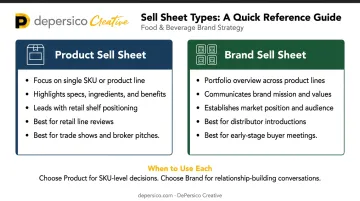
These two formats serve different purposes, and choosing the wrong one for the context can cost you the meeting:
| Format | Focus | Best Used For |
|---|---|---|
| Product Sell Sheet | Single SKU or product line, specs, benefits | Retail line reviews, trade shows, broker pitches |
| Brand Sell Sheet | Portfolio overview, mission, market position | New distributor introductions, early-stage buyer meetings |
Most brands need both eventually — the format that fits depends on where you are in the conversation. A startup introducing itself to UNFI needs a brand sell sheet to establish credibility first. That same brand walking into a Kroger line review needs a product-specific one with specs, pricing, and sell-through data front and center.
What Every CPG Sell Sheet Must Include
Buyers evaluate two things simultaneously: the emotional pull of the brand and the practical viability of carrying it. Your sell sheet has to deliver both on a single page. The six elements below cover exactly that — from the visuals that stop a buyer cold to the specs that get you into their system.
Logo, Brand Name, and Headline
The logo and headline must be the first things a buyer sees. The headline isn't a tagline — it's a 3–5 word declaration of your product's core USP. It sets the tone for everything below it.
High-Quality Product Imagery
Professional food photography is essential. RangeMe identifies the product image as the single most important field for attracting buyer attention — it may determine whether a buyer views any additional product details at all.
Images should:
- Show actual retail packaging clearly
- Include lifestyle context on the front side
- Be high-resolution and properly lit throughout
- Reflect a quality level that matches or exceeds category competitors
Product Description and USP
Keep it tight. The description should answer three questions in two to three sentences: What is it? Who is it for? Why is it different? Tie it directly back to your headline so buyers leave with one clear takeaway, not a list of features.
Product Specs and SKU Details
This is where sell sheets most commonly fail. GS1 US confirms that complete and accurate product data is essential for effective trading-partner collaboration — and incomplete specs create friction that makes buyers move on.
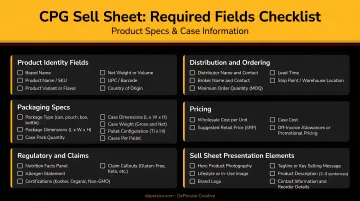
Required fields include:
- Product name (exactly as it appears on packaging)
- Net weight and format
- UPC/barcode (high-res image, scannable)
- Shelf life
- Certifications and claims (Non-GMO, gluten-free, etc.)
- Piece count per case
Case and Ordering Information
This section signals operational readiness. Distributors look for:
- Case count and case dimensions
- GTIN-14 (the case-level identifier)
- Minimum order quantity (MOQ)
- Storage temperature requirements
Pricing belongs off the sell sheet. Wholesale and distributor pricing removes negotiating flexibility and creates channel conflicts when the same document reaches multiple buyers. Share it verbally or in a separate document tailored to each channel.
Call-to-Action and Contact Information
Every sell sheet needs a clear next step. "Request Samples," "Place an Order," or "Visit Our Website" — pick one and make it prominent. Include:
- Sales contact name and title
- Phone and email
- Website URL
- Optional: RangeMe profile link or QR code for digital follow-up
How to Design Your CPG Sell Sheet Step by Step
Good content in a poor layout still loses. Execution determines whether your sell sheet actually lands.
Step 1: Choose Your Format and Canvas
Standard sell sheets are 8.5" × 11", two-sided. Use the front for brand storytelling — hero imagery, logo, headline, USP. Use the back for business data — specs, case info, certifications, contact.
If you have a larger product line, legal size (8.5" × 14") gives you more breathing room, but only expand when genuinely necessary. Scannability is more valuable than completeness.
Paper stock and finish should match your brand positioning. A premium natural food brand warrants matte, uncoated stock. A bold, energetic snack brand might lean into a gloss finish.
Step 2: Map Out Your Visual Hierarchy
Before adding a single word of copy, sketch the layout:
- Top third: Logo, hero image, headline
- Middle: Product description, USP, key claims
- Back side: Specs in a grid, case info, contact block, CTA
Buyers scan before they read. If the most important information isn't immediately visible in the first pass, it won't get read at all.
Step 3: Write CPG-Specific Copy That Creates Appetite
Food copy has one job: make the buyer's consumer want to eat or drink the product. That means sensory language — texture, flavor, occasion — not ingredient lists dressed up as benefits.
Sensory copy outperforms spec copy every time: ✓ "Rich, slow-roasted dark chocolate with a fudgy center" ✗ "Contains premium cocoa"
Once your copy is dialed in, make sure it matches exactly how the product appears on the physical package and GS1 profile. Consistency across all buyer touchpoints reduces confusion and builds credibility.
Step 4: Source or Commission Professional Food Photography
Amateur product photos — even for an excellent product — signal a lack of investment in the brand. That impression forms before a buyer reads a single word.
Sell sheet images need:
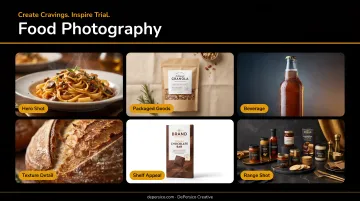
- Hero shots: Clean, crisp, neutral background — product as the star
- Lifestyle shots: In-context images showing the product in use or setting
- Print-ready resolution: Minimum 300 DPI for all images throughout
When photography and layout are produced under the same roof, the images are composed specifically for the sell sheet — not adapted from photos built for something else. DePersico Creative's in-house test kitchen and photography studio handles hero shots, lifestyle images, and flat lays as part of the same project workflow, so the visual system holds together from the first glance.
Step 5: Finalize, Proof, and Create a Digital Version
Before sending anything to print or distribution, run through this checklist:
- All product specs match actual packaging
- Barcodes are high-res and scannable
- No wholesale pricing appears anywhere
- Contact information is current
- All certifications are accurate and up to date
Then produce two versions: a print-ready PDF for trade shows and leave-behinds, and a digital PDF with embedded links and a QR code for email follow-ups and buyer portal submissions. Platforms like RangeMe — used by more than 15,000 retail and foodservice buyers — allow Premium and Pro suppliers to make downloadable sell sheets available directly on their profiles.
Key Variables That Make or Break a CPG Sell Sheet
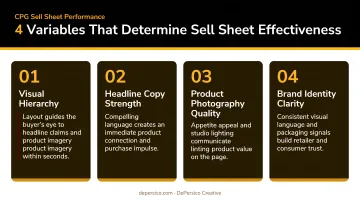
Two sell sheets with identical content can produce completely different results depending on how these four variables are handled.
Visual Consistency With Packaging Buyers notice when the sell sheet's colors, fonts, and photography style don't match the product they'll actually see on shelf. That disconnect signals the brand isn't ready for retail. The sell sheet should feel like a natural extension of the package design, not a separately produced document.
Copy Tone and Specificity "Great taste, high quality" tells a buyer nothing they haven't read a hundred times. Copy must be specific, sensory, and tied to the vocabulary the buyer's target consumer actually uses when choosing products in the aisle. Vague descriptions get skimmed; specific ones get remembered.
Image Quality and Food Styling This is the fastest variable to get wrong and the hardest to recover from. Before finalizing photography, look at what the top three competitors in your category are presenting to buyers. Your images need to meet or exceed that standard. NielsenIQ research confirms that high-quality visuals support buyer and shopper confidence and reduce uncertainty about a product.
Information Completeness Buyers at regional chains and national distributors use sell sheets as reference documents long after the initial meeting. Any of these gaps creates friction — and friction means a buyer moves to the next vendor:
- Missing shelf life or best-by date
- No UPC image or scannable barcode
- No case dimensions or pallet configuration
- Missing contact information or reorder details
Common Mistakes CPG Brands Make on Their Sell Sheets
Overcrowding with Too Many SKUs or Claims
Stacking a "Girl Scout sash" of attribute badges across the page buries your actual USP in visual noise. If your product is Non-GMO, gluten-free, keto-friendly, and woman-owned, that's a crowded sell sheet — not a compelling one.
Instead:
- Pick the one or two claims that matter most to the specific buyer you're pitching
- Build channel-specific versions for foodservice, club, and retail
- Let each version do one job well rather than trying to serve every audience at once
Using Low-Quality Imagery
Poor photography is the single fastest way to lose a buyer's confidence before they read a word. Even a genuinely excellent product looks like a hobby project when shot on a kitchen counter with a smartphone. Your imagery signals quality before your copy gets the chance.
Including Wholesale Pricing on a Publicly Distributed Sell Sheet
Static pricing on a circulating PDF removes negotiating flexibility and creates channel conflicts when the same document reaches buyers operating at different margin requirements. Some distributor onboarding processes, like UNFI's, do require a separate price list. That's a different document entirely — keep it off your sell sheet.
Conclusion
A great CPG sell sheet is equal parts strategic and creative. It has to communicate brand identity and product appeal at a glance while giving buyers the precise operational data they need to move forward. Brands that treat their sell sheet as a serious business tool — not a last-minute printout before a trade show — see the difference in buyer engagement.
The standard is straightforward: your sell sheet should feel as polished and intentional as the product packaging itself. When both are built from the same brand strategy, buyers aren't just reading a document — they're experiencing the product before it ever hits a shelf.
For food and beverage brands that want that cohesion built in from the start, DePersico Creative has developed sell sheets, packaging, and brand launch materials for over 45 years — working with early-stage startups and national names like Kellogg's and Campbell's alike. Their in-house team covers creative linguistics, food photography, and print-ready design, so brand voice stays consistent from concept to final file.
Frequently Asked Questions
Frequently Asked Questions
What should a CPG sell sheet include?
A complete CPG sell sheet typically includes:
- Logo and headline
- High-quality product imagery
- Benefit-driven description and USP
- SKU specs (UPC, net weight, shelf life, case info)
- Relevant certifications
- Clear call-to-action
- Current contact information
What is the difference between a sales sheet and a sell sheet?
The terms are often used interchangeably, but "sell sheet" typically refers to a product-focused one-pager used by CPG brands to pitch retail buyers, while "sales sheet" can refer more broadly to any B2B sales document.
What is a brand sell sheet?
A brand sell sheet focuses on the overall business — its mission, portfolio, and market position — rather than a single product. It's typically used to introduce a brand to new distributors or at early-stage buyer meetings before a product-level pitch.
How long should a CPG sell sheet be?
One 8.5" × 11" page, two-sided, is the standard. Only expand to legal size or a second page if a product line genuinely can't fit — scannability and brevity are more valuable than covering every detail.
Should you include pricing on a CPG sell sheet?
MSRP may appear on consumer-facing versions, but wholesale or distributor pricing should generally be kept off publicly distributed sell sheets. Pricing should be shared verbally or in a separate channel-specific document to protect negotiating flexibility.
How is a CPG sell sheet different from a pitch deck?
A pitch deck is a multi-slide presentation walked through in a meeting. A sell sheet is a standalone one-pager designed to be left behind, emailed, or displayed at trade shows. It has to communicate value on its own, with no one in the room to explain it.